
PHOTO/PRINT/REALISM
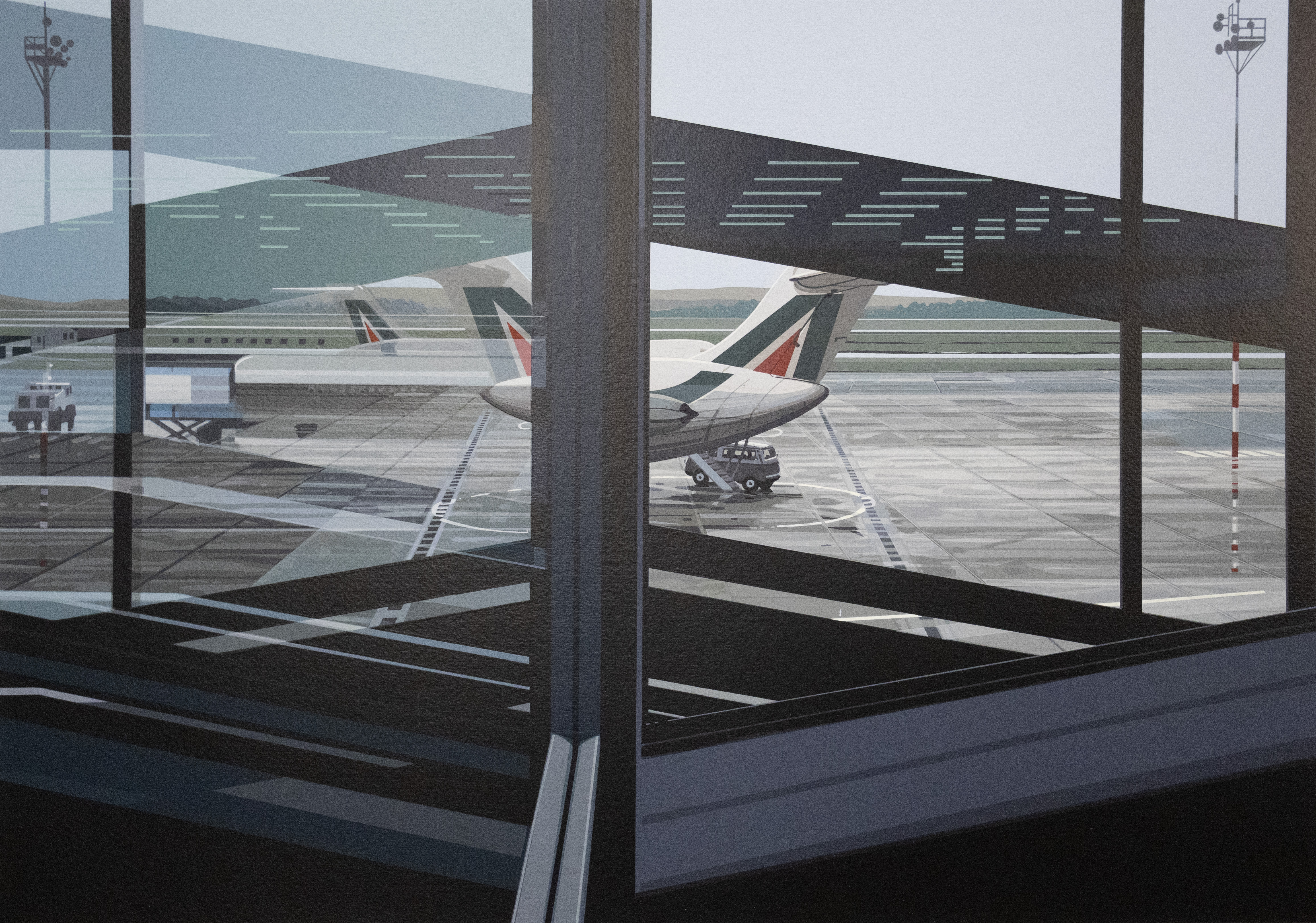
Photorealist artists went to great lengths to render carefully selected images with the cold precision of photography. They are best known for meticulous paintings produced in the 1970s but also made many highly innovative prints. Photorealist works on paper were very time-consuming and costly to produce with some taking years to complete. This exhibition features screenprints, etchings, aquatints, and lithographs by Robert Bechtle, Henry Chodkowski, Robert Cottingham, Richard Estes, and Sylvia Plimack Mangold, among others.
By the late twentieth century, artists around the world were hyperaware of the influence of photography and popular culture on perceptions of reality. The curator Harald Szeemann is often credited with bringing the world’s attention to photorealism through its inclusion in his 1972 Documenta exhibition Questioning Reality - Visual Worlds Today. The artists in this exhibition use aquatint, etching, lithography, screenprinting, and woodcuts to interrogate what it means to represent things as they actually are.
UK Professor of Art Richard B. Freeman encouraged the Museum to collect prints by contemporary artists, and he curated many of these in an annual series of Graphics exhibitions. This exhibition draws on the collection he helped to build and highlights connections between photorealists and their Pop Art predecessors. Works by Richard Hamilton, David Hockney, James Rosenquist, and Wayne Thiebaud show shared interests in transcribing snapshot-like images using traditional printmaking techniques.
More Events To Enjoy
It looks like this event is pretty unique. Peruse our events calendar to find more events!