Appalachia in the Bluegrass

Now in its eighth season, the 2012 Appalachia in the Bluegrass concert series is generously supported by the John Jacob Niles Center for American Music, the Appalachian Studies Program, and the Appalachian Center of the University of Kentucky. It is with great gratitude that the John Jacob Niles Center for American Music acknowledges the leadership and support of Dr. Skip Gray, Interim Director of the School of Music and Dr. Ann Kingsolver, Director of the Appalachian Center and the Appalachian Studies Program.
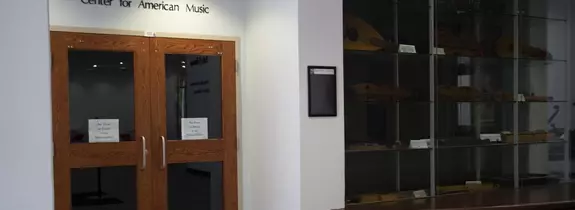
All concerts are in the Niles Gallery of the Lucille C. Little Fine Arts Library just off Rose Street at the University of Kentucky.
Concerts are on Fridays at noon and last one hour. Admission is free and open to the public. Contact ron.pen@uky.edu for further information.
September 7: Appalatin
Appalatin formed in 2006 in Louisville through band members’ mutual love of the folk music sounds of Latin America and the Caribbean. Appalatin’s original music is a fusion of Latin and Appalachian folk music from the band member’s homelands in Central America, the Andes and Appalachia. Instrumentation features the guitar, charango, mandolin, Andean flutes, bongos, congas, and cajón. Their songs reflect messages of freedom, community, empowerment, human rights, spirituality, and environmental stewardship.
Appalatin’s first self-titled CD was released in March 2011.
Website: http://www.appalatin.com/Appalatin/Appalatin.html
September 14: Lee Boy Sexton with John Sexton
A master of the drop-thumb and two-finger banjo style, Lee “Boy” Sexton has lived his whole life near his birthplace in Letcher County, Ky. Born in 1927, he acquired his first banjo, a homemade wooden fretless model with a groundhog skin head, for a dollar when he was eight years old (he worked to clear a field for a week to earn that dollar), and with instruction from his father and uncles (one of whom was banjo player Morgan Sexton, winner of the National Heritage Award). Sexton soon mastered the instrument, and the fiddle, as well. As a young man he would work all week in the mines and then play music all weekend at house parties, bean stringings, and corn shuckings. June Appal issued an LP of traditional material, Whoa Mule, in 1988, and an expanded CD version in 2004 with an additional 40 minutes of music. One of the most respected and revered folk musicians in East Kentucky, Sexton garnered a brief scene in the 1980 film Coal Miner's Daughter, where he appears playing at a square dance.
In 1999 he was presented with the Kentucky Governor's Award for Lifetime Achievement in the Arts.
Website: http://appalshop.org/frontporch/artists/lsexton.htm
September 21: Sparky and Rhonda Rucker
Sparky and Rhonda Rucker perform throughout the U.S. as well as overseas, singing songs and telling stories from the American folk tradition. Sparky Rucker has been performing over forty years and is internationally recognized as a leading folklorist, musician, historian, storyteller, and author. He accompanies himself with fingerstyle picking and bottleneck blues guitar, banjo, and spoons. Rhonda Rucker is an accomplished harmonica, piano, banjo, and bones player, and also adds vocal harmonies to their songs.
Sparky and Rhonda are sure to deliver an uplifting presentation of toe-tapping music spiced with humor, history, and tall tales. They take their audience on an educational and emotional journey that ranges from poignant stories of slavery and war to an amusing rendition of a Brer Rabbit tale or their witty commentaries on current events. Their music includes a variety of old-time blues, slave songs, Appalachian music, spirituals, ballads, work songs, Civil War music, cowboy music, railroad songs, and a few of their own original compositions.
Sparky and Rhonda have numerous recordings, and their 1991 release, Treasures and Tears, was nominated for the W.C. Handy Award for Best Traditional Recording. They have also contributed music to the syndicated television miniseries The Wild West (directed by Kieth Merrill). Sparky's unique renditions of John Henry and Jesse James were used in the National Geographic Society’s 1994 video entitled Storytelling in North America. Sparky Rucker has also appeared on numerous radio programs, including National Public Radio’s Morning Edition, Prairie Home Companion, and Mountain Stage. He also performed in Carry It On and Amazing Grace: Music in America, two videos produced by the Public Broadcasting System.
Website: http://www.sparkyandrhonda.com/
September 28: Appalachian Association of Sacred Harp Singers
Sacred Harp is a uniquely American tradition that brings communities together to sing three- and four-part hymns and anthems. It is a proudly inclusive and democratic part of our shared cultural heritage. Participants are not concerned with re-creating or re-enacting historical events. Our tradition is a living, breathing, ongoing practice passed directly to us by generations of singers, many gone on before and many still living. All events welcome beginners and newcomers, with no musical experience or religious affiliation required — in fact, the tradition was born from colonial “singing schools” whose purpose was to teach beginners to sing and our methods continue to reflect this goal.
The Appalachian Association of Sacred Harp Singers is an informal group that meets to sing from this Sacred Harp and Southern Harmony shape note tradition. Formed around 1980 with a core of singers drawn from both Lexington and Berea, Ky/, the group began meeting in homes and gradually stated meeting monthly at Chapel Hill Presbyterian Church in Lexington.
Since 2001, the group has met in the Gallery of the John Jacob Niles Center for American Music on the university campus. Currently, the group meets every second Sunday of the month from 3:00-5:00. The annual Kentucky State Sacred Harp Singing takes place at Pisgah Presbyterian Church in Woodford County on the Saturday before the third Sunday of May.
October 5: Jarflies
Sitting out in front of Third Street Coffee in Lexington, Ky., playing a song he had written for a short film by local poet Bianca Spriggs, Mason saw Art walking into the shop and asked him if he’d like to play on the tune. And he did. And then they worked on a whole bunch more and started calling themselves The Jarflies. Now those songs are sounding pretty good, and The Jarflies would like to play some of ‘em for you.
For 30 years (or more), Art Mize has been fiddling in the Kentucky Bluegrass and surrounding regions, living out his love for traditional fiddling idioms. He also plays mandolin and guitar, sings, teaches, brings finesse and expertise to the restoration of violin family instruments, and is the father of three wonderful children.
Mason Colby grew up in southern Louisiana and drifted around a bit before settling down in Lexington. It soon became apparent that he was going to have to start playing the banjo. The backyards and living rooms of Kentucky have provided a particularly pleasant education.
Website: http://www.thejarflies.com/shows/
October 12: Roger Cooper
All traditions have two characteristics in common: continuity and change. Kentucky fiddle traditions are a great example. Listen to a fiddler from northeastern Kentucky, and you’ll quickly notice differences in technique, style, and even names of the tunes than you encounter in other parts of Appalachia or western Kentucky. The Ohio River has played a major part in shaping the cultural landscape, which includes the fiddling, of Lewis County. Generations of travelers and settlers have contributed to what we know as a distinct tradition, which will continue changing in the future. One distinguished artist who embodies the unique fiddle traditions of the area is Roger Cooper.
Early in life, Roger made it his mission to learn from all the traditional fiddlers in Lewis County. At age twelve he played guitar behind fiddler Joe Stamper on Vanceburg radio WKKS. Roger spent years mastering the tunes as he heard them and playing them at contests, dances, and concerts. He has released albums such as Essence of Old Kentucky on Rounder Records.
Web: http://www.mustrad.org.uk/articles/r_coop1.htm
October 19: Morehead State University Kentucky Center for Traditional Music Old Time String Band
The “Traditional Music Program” is among the fastest growing academic traditional music programs at any school of higher education. We are fortunate that Morehead State University wants to support a dynamic environment in which students have an exceptional opportunity to study this aspect of our cultural traditions. The right time is now and the place is Morehead State University for this remarkable program.
The “Traditional Music Archives” contains a large collection of traditional music that is accessible to the public for scholarly use. These digital audio and video files include many examples of traditional Appalachian music and culture, including ballads and songs, fiddle and banjo tunes, old-time string band music, traditional and modern bluegrass music, religious preaching, and interviews with performers and church members.
“Outreach” includes performances, presentations, lecture/demonstrations and workshops by The Kentucky Center for Traditional Music faculty which includes professional entertainers who tour extensively. “Outreach” also includes Morehead State University student bands that are sections of The Traditional Music Ensemble, Bluegrass Band, Celtic Band, Old Time String Band and Old Time Country Band classes. These groups perform under the direction of their instructors on the MSU campus and across the region for programs such as the "Sounds of Our Heritage" series, which introduces students of all ages to many forms of traditional music.
Website: http://www2.moreheadstate.edu/kctm/
October 26: Si Kahn
His songs of family, community, work and freedom have been recorded by more than 100 artists and translated into half a dozen languages, including French, Welsh, Hebrew, Swedish, Drents (a Dutch dialect) and Plattdeutsch ("Low German"). Such songs as Aragon Mill (aka Belfast Mill, Oregon Mill, Douglas Mill, Weave and Spin), Gone Gonna Rise Again, Go To Work On Monday, and Rubber Blubber Whale have become a part of the oral tradition, and are sung in folk clubs and living rooms, at rallies and on picket lines around the world. Si has performed at concerts and festivals in Portugal, the Netherlands, Belgium, Germany, Ireland, Scotland, Wales, England, Northern Ireland, Canada and the U.S. His musical body of work includes 15 albums of original songs for adults and children, plus a collection of traditional labor, civil rights and women's songs recorded with Pete Seeger and Jane Sapp.
Si Kahn has worked for over 45 years as a civil rights, labor and community organizer and musician. He began his organizing career in 1965 in Arkansas with the Student Nonviolent Coordinating Committee, more popularly known as SNCC, the student wing of the Southern Civil Rights Movement. During the War on Poverty, he served first as a VISTA Volunteer and later as Deputy Director of an eightcounty community action agency in rural Georgia, where he also coached the first racially integrated Little League team in that part of the state.
During the 1970s, he worked with the United Mine Workers of America (UMWA) during the Brookside Strike in Harlan County, Ky., and was an Area Director of the J.P. Stevens Campaign for the Amalgamated Clothing and Textile Workers Union (ACTWU). These historic labor struggles are portrayed in the movies Harlan County U.S.A. and Norma Rae.
Si founded Grassroots Leadership, a Southern-based national organization, in 1980, and served as its Executive Director for 30 years, becoming Executive Director Emeritus on May Day 2010. For the past 12 years, Grassroots Leadership has worked to oppose privatization and to defend the public sector. This work currently includes a campaign to abolish all for-profit private prisons, jails and detention centers, including immigrant detention centers, as a step towards helping create a prison and criminal justice system that is at least to some extent just and humane.
Website: http://sikahn.com/
November 2: Don Pedi
Don Pedi was born into a musical family in Chelsea, Mass. On weekends, his grandfather, who died before Don was born, would close his barber shop for business, and open his home in the back as a gathering place for family and friends to share homemade food, fellowship and live music. Don's grandfather played guitar, mandolin and banjo. Don's uncle Frank made his living singing and playing music. Another gifted singer is Don's dad. He'll burst into song at the drop of a hat.
Don got involved with the Boston area folk music scene in the early sixties. 1964 was when he first laid eyes on a dulcimer. It was being played by Richard Farina at a live performance by Mimi and Richard Farina at the old Unicorn Coffee House in Boston.
The sound of the dulcimer proved most alluring. That night in a conversation with Richard Farina, Don was convinced that someday he would get himself a dulcimer and play it. Contemporary performers like Bob Dylan, Tom Paxton, Patrick Sky, Joan Baez and others attracted Don to the Newport Folk Festival. While there he was exposed to traditional musicians like Frank Proffitt, Doc Watson, Mississippi John Hurt, Almeda Riddle and such that where a major influence on his musical tastes.
By 1966 Don was traveling a lot. With Cambridge as a base, he lived for various periods of time in different parts of the country. In 1973, while living in the Colorado Rockies, Don met Tad Wright and Keith Zimmerman, a couple of musicians from Asheville, NC. After hearing Don play, they invited him to join them. He did, and they piled into Tad's 1969 Volkswagen mini-van and drove to North Carolina. At first sight of the mountains around Harmon Den and Fines Creek, Don knew he was home. He's pretty much lived in and around Asheville from then on. Since settling in Western North Carolina Don has been recognized as the man who could "really play" a dulcimer. He is a pioneer in that his music has broken new ground and cleared a path for others. In Don's hands, the dulcimer has been accepted as an instrument well suited to playing traditional Southern Dance music. This was at a time when most "Old-Time" musicians thought a dulcimer should be hung on a wall with a pretty ribbon.
In 1991 Don and wife Jean moved to a little farm in the mountains of Madison County, NC. The area is rich in traditional music and customs (neighbors still plow with mules and horses). His most recent recording is Stranger on a Mule with acclaimed fiddler Bruce Greene.
Website: http://www.donpedi.com/
November 9: Ruth McLain Smith
Ruth’s musical history is intertwined with the remarkable story of her family band.
Ruth’s father, Raymond Kane McLain, leader of the world- renowned McLain Family Band, educator and librarian, was born in Alliance, Ohio, on April 18, 1928. McLain's study and collection of Appalachian music took him to eastern Kentucky and a job at the Hindman Settlement School as recreation director in 1954. Two years later, he became Executive Director of the School where he served for 14 more years.
With his interests in folklore, he promoted Appalachian Mountain culture, music and dancing of the region, and took Settlement School students to perform across the US at events such as the World's Fair in New York City. As Music Director for the Berea College Country Dancers, Raymond K. toured the US and South America and performed at the White House for President John F. Kennedy. Their children, Raymond W., Alice, Ruth, Nancy Ann, and Michael, grew up with a love of music of all kinds, especially the music of the Appalachian region. It was a logical step for Raymond K. to form the McLain Family Band in 1968 when they began performing and doing a weekly show at WKYH-TV in Hazard, Ky. In 1970, the family moved to Berea, Ky., where Raymond K. joined the music faculty at Berea College and created the country's first university level Bluegrass and Appalachian music courses. The McLain Family Band's overseas touring began after playing for the National Endowment for the Arts Music Committee which met that year in Berea. Composer Gian Carlo Menotti was so charmed by the band that he invited them to play at his Spoleto Festival in Italy in 1972. While abroad that summer, they also had musical engagements in Germany and Belgium. Over the next 18 years, the McLain Family Band made 14 overseas tours performing in a total of 62 foreign countries. In the mid 1970s, the McLain family bought their Big Hill Farm near Berea and for 13 years hosted the internationally recognized annual McLain Family Festival showcasing family bands from the US and abroad. Between 1969 and 1989, as one of the top traditional music bands in the US, the McLains performed at bluegrass festivals, toured for arts councils and gave community concerts in all 50 states, as well as having solo concerts at the nation's most prestigious concert halls, including Carnegie Hall, the Grand Ole Opry, the Lincoln Center and the Kennedy Center for the Performing Arts.
As the first bluegrass band to perform with symphony orchestras, the McLain Family Band performed these pieces in over 200 concerts with more than 100 orchestras nationwide, including Cincinnati, Louisville, Atlanta, Detroit, Pittsburgh, St. Louis, Anchorage, Rochester, Houston, Denver, Phoenix and the National Symphony Orchestra. The McLain Family Band released 14 recordings through their record company, Country Life Records.
Ruth was a member of that band, singing, dancing, and playing bass all over the world. Recently, she has returned to Berea, Ky.
Website: http://www.facebook.com/RS4books
November 16: Rich and the Po' Folks
Rich and the Po' Folks dates to the spring of 2006 when a group of friends got together with a common goal....to build a band on their shared love for the traditional music of east Kentucky and southwest Virginia. Taking their inspiration from some of the jewels of Appalachian music--fiddlers, banjo players, singers, songwriters-- Rich and the Po' Folks take the work of Old Time giants such as Art Stamper, Ed Haley, Charlie Osborne, George Gibson, Addie Graham, and John Morgan Salyer and use fiddle, banjo, bass, mandolin and guitar to kick it up as only a string band can! Their recent CD When the Whistle Blew is one of the finest recordings to come from East Kentucky's coal fields in many a year.
November 30: Red State Ramblers
The music of the Red State Ramblers features native and adopted Kentuckians playing Kentucky tunes and songs that resonate with the truth of life lived close to the font from which this music springs. Will and Jeff grew up in the Bluegrass State, while Nikos and Kevin were inevitably drawn to the Commonwealth several years ago. This is old time music, a music that sings of the old ways in a new way that remains brilliantly alive. Old time music is the garden of delights that raised a progressive crop of genres that flowered as swing, bluegrass, rockabilly, and country. Old time music is the true vine that some folks continue to cherish, and pass on as precious heirlooms, a gift of the past to nourish us in the future.
The Ramblers, Will Bacon (banjo and kazoo), Kevin Kehrberg (bass, guitar), Jeff Keith (mandolin and guitar), and Nikos Pappas (fiddle) recently released their second recording, Commonwealth based on traditional music of Kentucky and in 2008 the band was a finalist in the string band competition at Clifftop Old Time String Band Festival. Presently Jeff Keith and Dr. Kevin Kehrberg serve as professors at Warren Wilson College, Nikos Pappas is defending his Ph.D. in Musicology at the University of Kentucky and has been recently added as Assistant Professor of Music at the University of Alabama. Will Bacon is the owner of the celebrated contracting firm, BaConstruction.
This performance is a special reunion of the Ramblers who have traveled a “fur piece” to reunite at the Niles Gallery. In February, the Ramblers participated in a State Department sponsored cultural exchange with Ustatshakirt in Krygyzstan, and this October the band was in Ecuador on a State Department sponsored cultural exchange.
Websites:
http://www.myspace.com/redstateramblers
http://www.youtube.com/watch?v=xGqvWfPbt5w
December 7: Crankies with Anna Roberts-Gevalt & Elizabeth LaPrelle
Anna Roberts-Gevalt and Elizabeth LaPrelle met in 2010 and soon began planning adventures together.
Anna and Elizabeth use all the creative tools they can think of: storytelling, research, fiddle, banjo, guitar, ballads, puppets, poetry, and moving scrolls called “crankies."
They are trying to engage themselves and their audience with traditional art in all the forms it can take—from canning to woodcuts, quilting to singing, to better express the rich stories this region has to share.
Elizabeth LaPrelle has been performing Appalachian ballads and old-time songs since she was 11. Her magnificent voice, her respect for the songs, and her authentic mountain sound and style brought her to the attention of first Ginny Hawker and then Sheila Kay Adams. Raised in Rural Retreat, Va., Elizabeth attended old time fiddlers’ conventions and sang harmonies with her family, who taught her traditional singing styles and encouraged her to sing their own favorite American folk music. She received her undergraduate degree from the College of William and Mary with a major in Southern Appalachian Traditional Performance, and now tours the US regularly both performing and teaching.
Anna Roberts-Gevalt is a recent graduate of Wesleyan University in Connecticut. She grew up in Vermont, playing violin in a youth orchestra and in string quartets. Through recordings at college she was drawn to Appalachian fiddle and banjo tunes. This interest led to an internship at Appalshop in Whitesburg, Ky., during the summers of 2007 and 2008. This work has included archival research at Berea, East Tennessee State University, and the Library of Congress and hands-on experience at the Cowan Creek Mountain Music School, which puts banjos and fiddles into the hands of eager school age children.
Websites:
http://www.elizabethlaprelle.com/projects/anna-elizabeth-crankies
http://www.annarobertsgevalt.com/